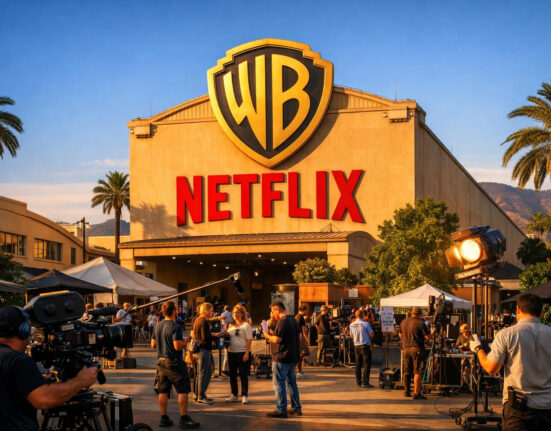


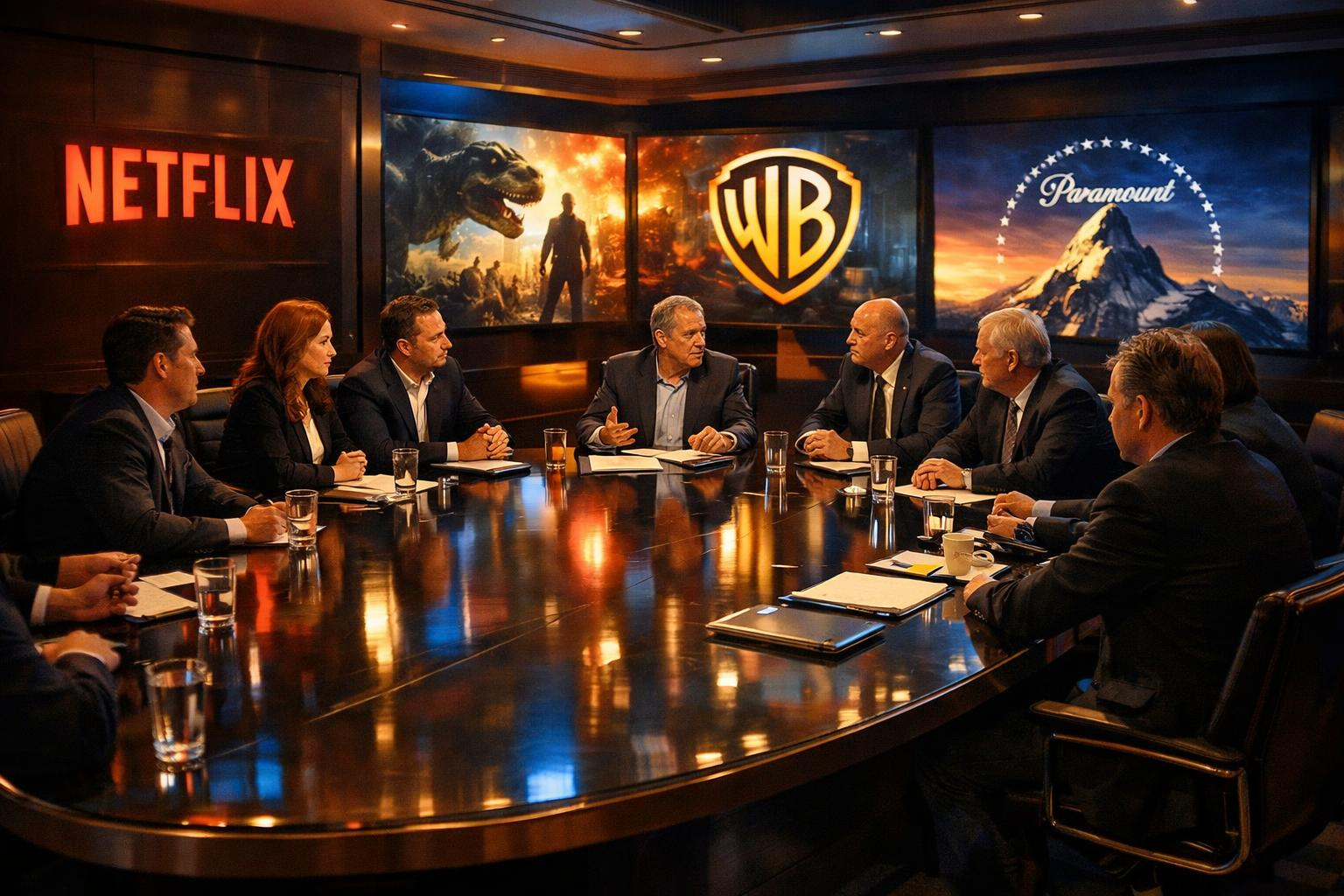
First came the news that Netflix had secured a deal to acquire the film giant Warner Bros Discovery for $72 billion. Then, just a week later, Paramount entered the fray at the last minute with a surprise bid of $108 billion. Five days after that, the Warner Bros. Discovery board was advising shareholders to accept Netflix’s original offer, deeming it to be in the company’s best interests. Phew!
First came the leak. Netflix, quietly and methodically, had locked up a $72 billion deal for Warner Bros Discovery (WBD). By the time most of Hollywood caught its breath, the implications were already setting in. Then—almost on cue—Paramount lobbed a grenade: a $108 billion counterbid, bigger, louder, and designed to embarrass everyone involved.
Five days later, the Warner Bros. Discovery board told shareholders to take Netflix’s lower offer anyway. End of drama. Or so it seemed.
The Fight No One Wanted in Public
In December 2025, Warner Bros. Discovery became the battleground for an existential fight over what Hollywood still is—and what it’s willing to admit it’s becoming. This wasn’t just about price. It was about control, certainty, and which version of the future scared the board less.
Behind closed doors, executives weren’t talking about “synergies.” They were talking about survival.
Netflix Moves First—and Cleanly
On December 5, Netflix struck with the kind of precision that legacy studios no longer possess. A definitive agreement. No flirtation. No trial balloon. Just a $72 billion offer for the only parts of Warner Bros. Discovery that actually matter in 2025.
Warner Bros. Pictures. HBO. HBO Max. DC. Games. The brands, the IP, the prestige—nearly a century of cultural leverage absorbed into a company that thinks in quarters, not eras.
The rest—the cable networks, the declining ad business, the linear baggage—was politely left behind. CNN. TNT. Discovery. Spun off, renamed, and effectively written out of the future. Netflix didn’t say it out loud, but it didn’t have to: that business is already over.
At $27.75 a share, the deal wasn’t generous. It was realistic. More importantly, it was executable—signed by a company with the balance sheet of over $400 billion to finish the job and the ruthlessness to walk away if it couldn’t.
Paramount’s Bid: Bigger, Louder, Riskier
Three days later, Paramount Skydance came crashing through the door with a headline number designed to stop the bleeding: $108 billion. All cash. All of Warner Bros. Discovery. No carve-outs. No spin-offs. Just brute-force scale.
It was a bid fueled as much by ego as by strategy.
David Ellison and his backers pitched a romantic idea—keep everything together, build a modern media conglomerate, prove that old Hollywood could still muscle its way into relevance. Streaming plus cable. Prestige plus volume. History plus hope.
But in the boardroom, romance doesn’t clear debt or guarantee funding. And beneath the surface, directors kept circling the same question: How real is this money?
The Board Makes Its Choice
By December 17, the board had heard enough.
In a unanimous recommendation, Warner Bros. Discovery directors told shareholders to ignore the bigger number and take Netflix’s deal. Publicly, the language was diplomatic. Privately, it was colder.
Paramount’s offer carried financing risk. Too many assumptions. Too many “we’ll sort it out later” clauses. The equity backstop wasn’t firm enough. The timing wasn’t clean enough. The confidence wasn’t absolute.
Netflix, on the other hand, had already done the paperwork.
There was also the matter of penalties. Walking away from Netflix would cost WBD $2.8 billion—real money, immediately. And if regulators killed the deal, Netflix would be on the hook for $5.8 billion, the kind of reverse breakup fee that only a company completely sure of itself agrees to.
Boards like certainty. Netflix offered it. Paramount didn’t.
Where the Bodies Are Buried
As of December 21, 2025, regulators are beginning their slow, performative march through the Netflix–WBD merger. Paramount insists its offer remains on the table, though few insiders believe it will ever be accepted.
The truth is simpler and harsher: the board didn’t choose Netflix because it was exciting. It chose Netflix because it was inevitable.
If the deal closes, this won’t be remembered as a bidding war. It will be remembered as the moment Hollywood stopped pretending the old rules still applied—and quietly handed its most valuable crown jewels to the company that never believed in them to begin with.
What Everyone’s Whispering About the WBD Deal
This isn’t for press. This isn’t for decks. This is just what people are actually saying.
Yes, Paramount’s number was bigger. Everyone knows that. That was never the point.
The Netflix deal was done the moment it was announced. Paramount’s bid was a disruption play—meant to force a rethink, stall momentum, maybe smoke out weakness. It didn’t work. The board didn’t blink.
Why? Because the Netflix money was real. Signed. Financed. Enforceable. No “subject to,” no heroic assumptions about capital markets staying friendly, no vague assurances about equity backstops that might materialize later. The Paramount offer looked bold in headlines and shaky in the footnotes.
Also worth saying quietly: no one on the WBD board wanted to own cable any longer than they already do. Netflix gave them a clean exit from the past. Paramount wanted to preserve it and call it strategy.
There’s a reason Netflix carved out CNN, TNT, Discovery, etc. and never looked back. Internally, that carve-out wasn’t controversial—it was the deal. Streaming and studios are the asset. Linear is the liability. Everyone understands this, even if they won’t say it on CNBC.
The breakup fees mattered more than anyone will admit. $2.8B to walk from Netflix is not theoretical money. And the $5.8B reverse fee Netflix agreed to is the tell—companies don’t write cheques like that unless they’re confident regulators eventually fold.
Paramount will keep insisting its bid is “superior.” That’s posture. The board has already chosen certainty over ambition. Translation: they chose the buyer most likely to close without blowing up their last year in the job.
The real takeaway no one’s printing yet:
This wasn’t a bidding war. It was a controlled handoff.
If the deal closes, it won’t mark Netflix’s evolution into a studio. It’ll mark Hollywood’s final admission that the studio era is over—and that the people who built it no longer get to decide what comes next.
Forward carefully.