

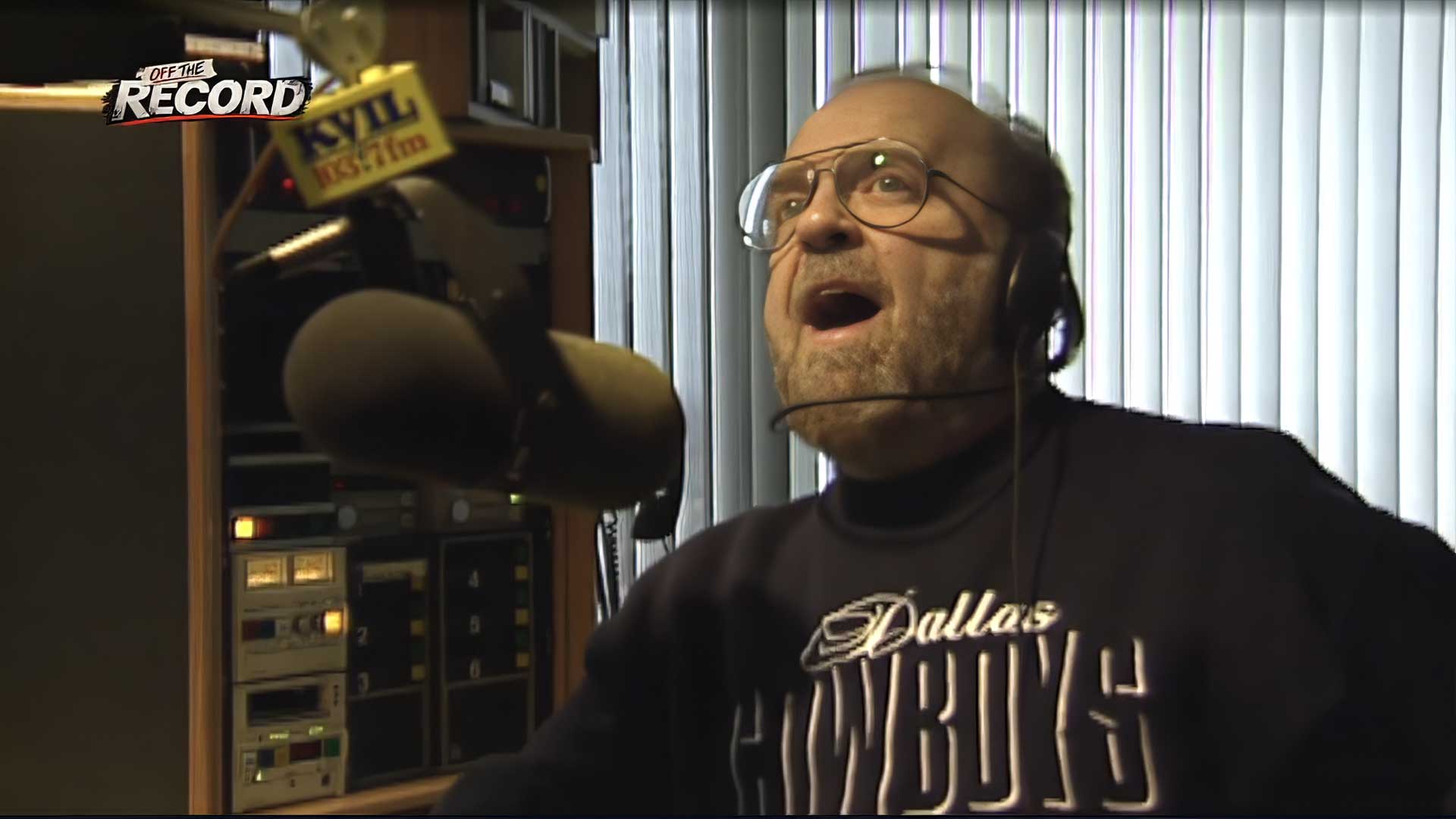
In 1988, one of America’s most celebrated radio personalities asked his listeners to send him twenty dollars. No prize, no competition and no explanation of what the money was for. What happened next was one of the most extraordinary episodes in American radio history.
By Samuel H. | Music & Broadcasting | The Classic Post
There are many ways to make money in broadcasting. You can sell advertising, attract sponsors, organise competitions or persuade somebody to pay an extraordinary amount for the privilege of having their name attached to a breakfast show.
Ron Chapman came up with something considerably simpler. He asked his listeners to send him twenty dollars.
That was it.
No holiday in Florida. No new car. No chance to meet a celebrity. Not even a particularly attractive coffee mug. Just twenty dollars, please.
And the remarkable thing is that thousands of people did exactly what he asked. By the time the whole business was over, Chapman and his Dallas radio station KVIL had received $244,240. Which rather suggests that Ron Chapman understood something about radio audiences that the rest of the industry was still trying to work out.
The Man Who Woke Up Dallas
Ron Chapman wasn’t just another disc jockey.
For more than three decades, he was one of the defining voices of Dallas radio, building KVIL into an enormously successful station and turning its morning programme into something approaching a local institution.
Chapman understood that great radio wasn’t simply about playing records. It was about personality, companionship and making listeners feel that they belonged to something.
He had an instinct for publicity and a willingness to try ideas that might have caused a more cautious programme director to reach for the aspirin.
His promotions could be elaborate, unpredictable and occasionally completely ridiculous.
But there was usually a method behind them.
Chapman understood the relationship between a broadcaster and an audience. He knew that listeners who invited him into their homes and cars every morning developed a sense of familiarity that was difficult to reproduce through any other medium.
He wasn’t merely a voice between records.
For many people in Dallas, he was part of the daily routine.
And one day, he decided to find out just how far that relationship extended.
Twenty Dollars. Nothing in Return.
The idea began with a rather bold proposition: could a radio personality persuade people to send money simply by asking?
No elaborate sales pitch. No promise of a reward.
Chapman put the idea to the test.
He went on the air and asked listeners to mail twenty-dollar checks to the station.
What followed was extraordinary.
The envelopes began arriving in their thousands.
The station had expected a modest response. Instead, the mail kept coming, and the amount of money quickly became far larger than anybody had anticipated.
Within days, Chapman was dealing with a problem most broadcasters would dearly love to experience.
His audience was sending him too much money.
He eventually had to ask them to stop.
And then things became even stranger.
The People Who Were Annoyed They Couldn’t Send Money
In our original filmed interview with Ron Chapman, he recalls one of the most wonderfully absurd aspects of the whole affair.
Some listeners were actually upset when they discovered that the station was no longer accepting their twenty dollars.
Think about that for a moment.
Here was a radio station offering absolutely nothing in return for a payment, and people were disappointed when the opportunity was withdrawn.
Most businesses spend fortunes trying to persuade customers to part with their money.
Ron Chapman had managed to create a situation in which people were practically insisting upon it.
It sounds like the sort of idea that would be dismissed immediately in a modern marketing meeting, probably after somebody had requested a risk assessment.
But in Dallas, it worked.
And it worked because Chapman had spent years building an extraordinary relationship with his listeners.
They trusted him. They enjoyed being part of his programmes. And, perhaps most importantly, they wanted to participate in whatever he was doing.
Even when nobody was entirely sure what that was.
What Do You Do With a Quarter of a Million Dollars?
There was, of course, a rather important question waiting at the end of all this.
What exactly was the station going to do with the money?
The original exercise had been conceived as a demonstration of the extraordinary bond between KVIL and its audience, not as a conventional charity appeal.
But once the money arrived, the station had to decide how to deal with it responsibly.
Chapman explains in our interview how the station contacted contributors to ask whether their payments could be used for charitable purposes.
According to his recollection, approximately 94 percent agreed.
The money was subsequently directed towards charitable causes in the Dallas–Fort Worth area.
What had begun as a seemingly ridiculous experiment in audience loyalty ended up doing some genuine good.
Not bad for a promotion that had promised absolutely nothing.
When Radio Really Mattered
It’s easy to forget just how powerful local radio once was.
Before streaming services, social media and the endless competition for our attention, a successful radio personality could become one of the most familiar figures in a city.
Listeners knew the voice, recognised the humour and felt they understood the person behind the microphone.
Ron Chapman was exceptionally good at creating that connection.
His success at KVIL wasn’t simply a matter of choosing popular records or giving away expensive prizes. It was the result of years spent entertaining, surprising and involving his audience.
The twenty-dollar experiment revealed just how strong that connection had become.
It also demonstrated something that modern broadcasters and advertisers still spend a great deal of time discussing: the value of trust.
You can buy advertising. You can pay for publicity. You can even manufacture a certain amount of excitement.
But persuading thousands of people to send you twenty dollars without offering anything in return requires something rather more difficult to acquire.
An audience that genuinely believes in you.
Ron Chapman Tells the Story
What makes this particular story especially enjoyable is that we don’t have to rely entirely on newspaper reports or second-hand recollections.
In our RODtv film, Ron Chapman tells the story himself in an original on-camera interview, accompanied by footage filmed in Dallas.
He remembers the initial request, the extraordinary response, the difficulties created by the unexpected flood of money and the eventual decision to put it to charitable use.
And hearing him describe it is a reminder of why he was such a successful broadcaster.
Chapman knew how to tell a story.
He understood timing, understatement and the pleasure of allowing an audience to appreciate the absurdity of a situation for themselves.
The twenty-dollar episode is funny, certainly. But it’s also a revealing insight into a period when local radio personalities could exercise an extraordinary influence over their communities.
Ron Chapman died in 2021, aged 85, leaving behind a remarkable broadcasting career and a reputation as one of the great personalities of American radio.
There are plenty of radio promotions that people remember for their prizes.
This one is remembered because there weren’t any.
And somehow, that made it all the more successful.
Watch Ron Chapman on RODtv
Ron Chapman: The DJ Who Asked for $20 and Got $244,240 is an Off the Record story featuring our original filmed interview with the legendary Dallas broadcaster.
Hear Chapman explain, in his own words, how a seemingly ridiculous idea turned into an extraordinary demonstration of audience loyalty — and how the money eventually found its way to charitable causes.