

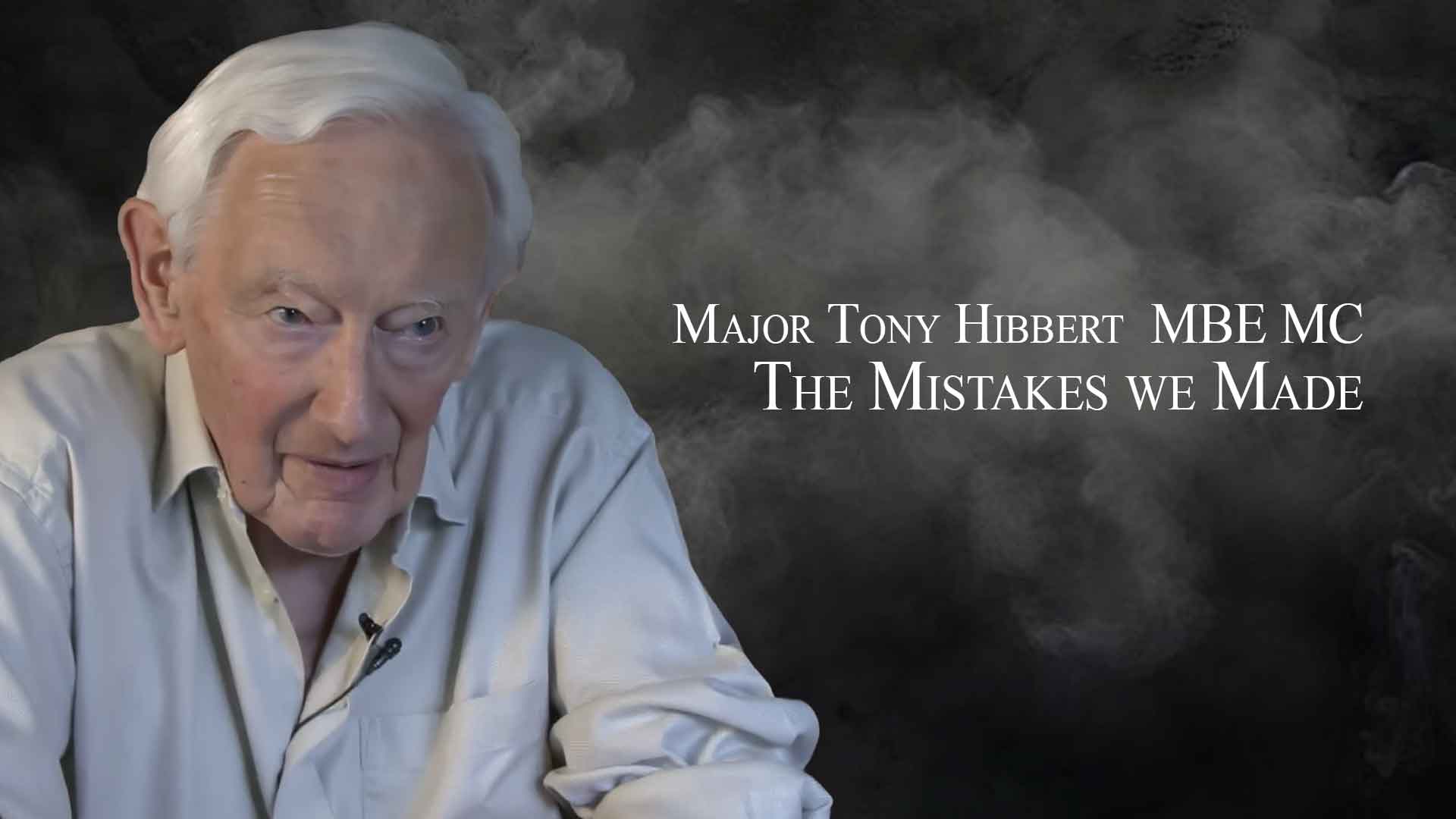
In September 1944, Major Tony Hibbert landed in Holland as Brigade Major of the 1st Parachute Brigade.
He was 26 years old.
What followed was one of the most famous airborne operations of the Second World War — an attempt to seize a series of bridges through Holland and open a route into Germany.
For Hibbert, however, the story of Arnhem was never simply one of extraordinary bravery against overwhelming odds.
He believed mistakes had been made before many of the men had even left England.
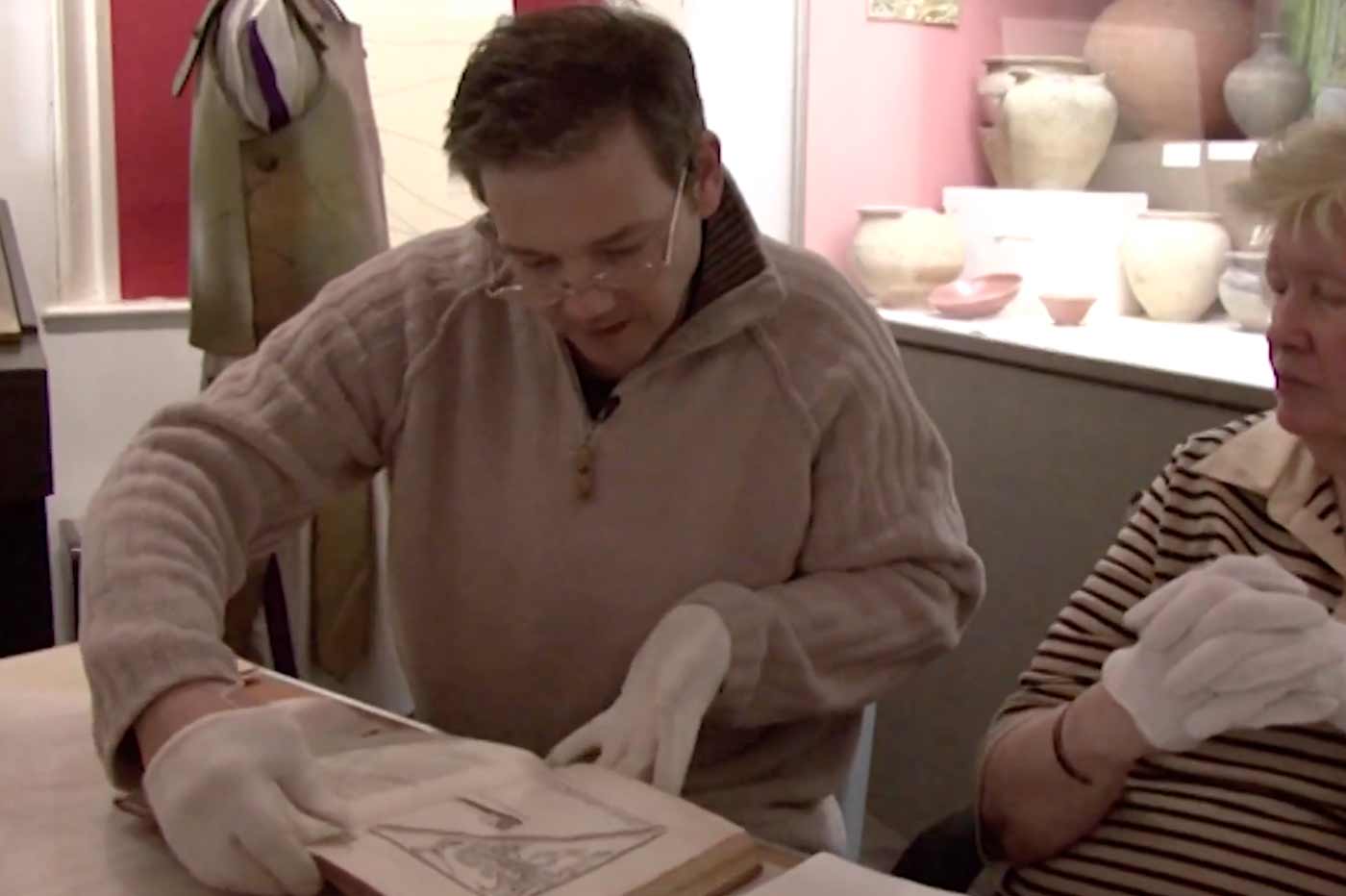
In September 2009, we visited Tony at his home in Cornwall and recorded a lengthy interview with him about Arnhem. By then he was in his nineties, but his recollection of the operation remained remarkably detailed.
He takes the story through almost minute by minute: the planning, the flight to Holland, the landing, the attempt to reach Arnhem Bridge and the increasingly desperate situation faced by the airborne troops.
But throughout his account there is another story.
Tony had been closely involved in the planning and knew what intelligence had been available. He had concerns about decisions taken before the operation began, including the choice of landing zones and the distance troops would have to cover to reach their objectives.
And he was particularly forthright about some of the senior figures involved.
At one point in the interview, as the conversation turns to Lieutenant-General Frederick “Boy” Browning, Tony stops himself.
“I have to be careful what I say…”
It is a small moment, but a revealing one.
Browning subsequently became closely associated with the Royal Family, serving as Treasurer to the Duke of Edinburgh. More than six decades after Arnhem, Tony was still choosing his words carefully.
Yet what makes his account interesting is that he isn’t speaking as an outsider looking back and deciding where the blame should lie.
He was part of it.
He attended the briefings, followed the orders and went into Arnhem with the men expected to carry them out.
Hibbert reached the northern end of Arnhem Bridge, where British airborne troops under Lieutenant-Colonel John Frost established their famous defensive position. As the operation collapsed around them, Hibbert was eventually captured.
Two days later, while being transported east, he escaped.
He subsequently made contact with the Dutch Resistance and became involved in organising Operation Pegasus, which helped more than a hundred stranded Allied servicemen escape back across the Rhine.
His war still wasn’t over.
In 1945, Hibbert was involved with T-Force and the race to secure strategically important German installations towards the end of the war.
It is an extraordinary military life, but it is the way Tony tells the story that makes the recording particularly valuable.
There is no modern historian interpreting his words and no attempt to tidy his memories into a convenient version of events. There are pauses, moments of reflection and occasions when he clearly considers just how far he wants to go.
That is also the idea behind Their Last Post, a new collection on RODtv built around original interviews we recorded with servicemen and women over many years.
Rather than retelling their stories for them, we’re returning to the original recordings and allowing the people who were actually there to speak for themselves.
Many of those voices are now gone.
The recordings remain.
Major Tony Hibbert’s account of Arnhem is one of them.
Their Last Post: Arnhem — The Mistakes We Made is now on RODtv.