

There are some famous places where the photograph has done most of the work for you. You arrive, recognise the view, take your own version of the same picture and move on.
Petra isn’t quite like that.
Part of the reason is that it makes you work for the introduction.
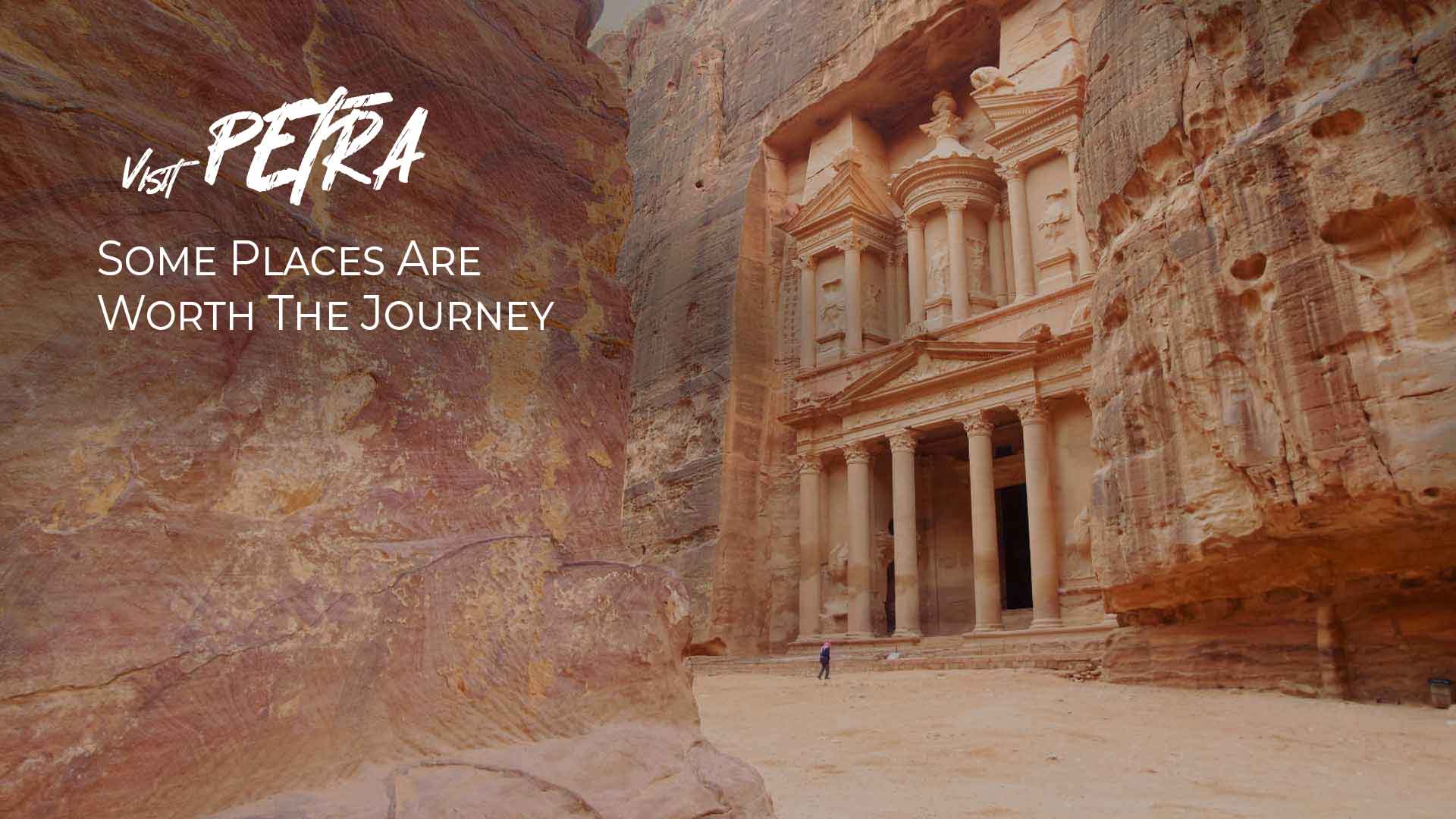
The ancient city in southern Jordan is approached through the Siq, a narrow gorge that twists for more than a kilometre between great walls of sandstone. In places they’re around 80 metres high, and for much of the walk there’s little indication of what is waiting at the other end.
Then, through a narrow opening in the rock, you see it.
The Treasury.
It’s one of travel’s great reveals.
The elaborate façade of Al-Khazneh, carved directly into the rose-coloured sandstone, is the image everyone associates with Petra. It has appeared in countless photographs and films, most famously Indiana Jones and the Last Crusade.
But the surprise for many first-time visitors is that the Treasury isn’t Petra. It’s simply the beginning.
Beyond it lies the remains of an extraordinary city created by the Nabataeans, who established Petra as an important trading centre more than 2,000 years ago. At its height, caravans carrying incense, spices and other valuable goods passed through here on routes connecting Arabia, Egypt and the Mediterranean.
Walk further and Petra gradually reveals itself: monumental tombs cut into the cliffs, temples, a theatre, colonnaded streets and caves scattered across a landscape of red and pink sandstone.
And if your legs are willing, there’s another remarkable sight still to come.
Around 800 rock-cut steps lead towards Ad Deir, the Monastery. It’s larger than the Treasury and its location, high above the main part of Petra, makes reaching it feel like a small adventure in itself.
This is one place where comfortable shoes are considerably more useful than fashionable ones.
More Than a Photograph
Petra deserves time.
You can see the major sights in a day, but staying nearby and arriving early gives you the chance to experience the site before the biggest crowds arrive. It also means you can occasionally stop walking and simply look around.
That’s important here.
Because the lasting memory of Petra isn’t necessarily one building.
It’s walking through the Siq and wondering what’s around the next corner. It’s the changing colours of the sandstone as the light moves across it. It’s climbing above the ancient city and suddenly appreciating its scale.
And it’s that first glimpse of the Treasury appearing between the walls of the gorge.
There are easier places to visit.
There are certainly places involving fewer steps.
But that’s rather the point.
Some places are worth the journey.
And Petra unquestionably belongs on The Bucket List.